A study in making AI materials look real. AI images default to perfect, and perfect reads as fake. I studied four materials — marble, honey, bubbles and silicone — with physics-first prompts, real light sources and deliberate micro-imperfections. Stills and video, all made in Gemini.
PROJECT INFO
Team Solo · Timeline 2025 · Tools Gemini, for stills and video
The brief
Self-initiated: could prompting alone get AI to make materials that pass as real?
What I found
AI output defaults to perfect: flawless surfaces, even light, no wear. Real materials never look like that, so perfection is what gives AI away. The trick is to make the AI make the imperfections.
The idea
Prompt for physics, not for looks. Each prompt describes how the material behaves, where the light really comes from, and the small flaws it should have.
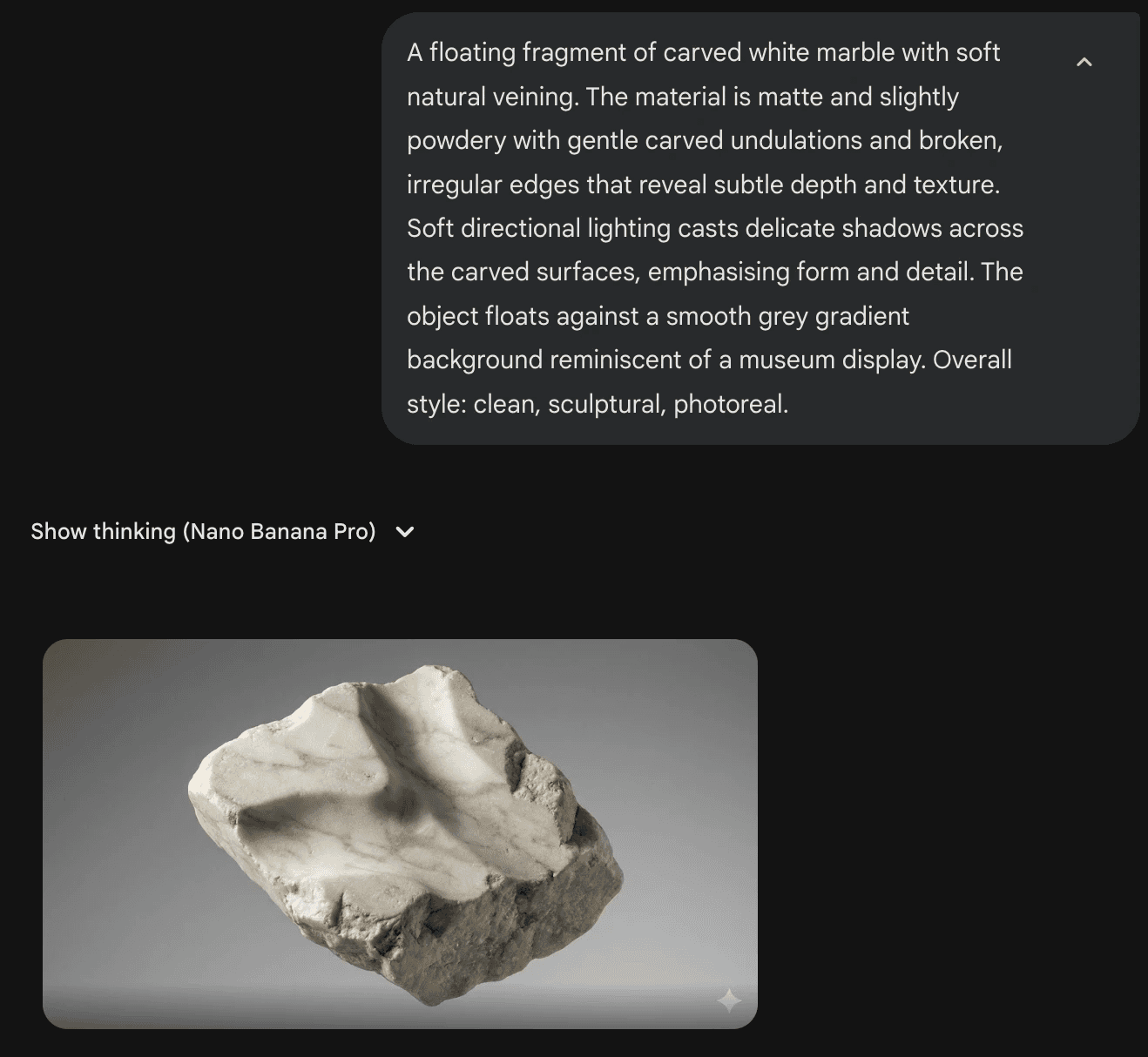
How it came together
Four materials. Marble, honey, bubbles and silicone: a stone, a liquid, a thin film and a soft solid.
Physics first. Each prompt starts with how the material behaves, not how it should look.
Real light. Every scene names a real light source and its direction, instead of asking for good lighting.
Deliberate flaws. Micro-imperfections are written into the prompt: the small marks and irregularities real materials have.
Stills to motion. Stills and video, all generated in Gemini.
What shipped
A set of stills and short videos across the four materials.
Outcome
Study only: made to learn.
Credits
Prompts and art direction Shaurya Singh